
Thurgood Marshall was more than a lawyer and judge; he was a person who changed the course of American history. When I explore his life, I see a story of courage, patience, and determination. You may know him as the first African American Supreme Court Justice, but there is much more to discover about his journey.
From fighting unfair laws to protecting equal rights, Marshall used the power of the courtroom to create lasting change. These interesting facts about Thurgood Marshall reveal the experiences, struggles, and achievements that made him one of the most important figures in civil rights history.
Quick Answer: Who Was Thurgood Marshall?
Thurgood Marshall was an American lawyer, civil rights activist, and the first African American Justice of the United States Supreme Court. He became famous for successfully arguing important civil rights cases, including Brown v. Board of Education, which helped end legal racial segregation in public schools.
What Are the Most Interesting Facts About Thurgood Marshall?
Interesting facts about Thurgood Marshall show how one individual can influence an entire nation through knowledge, courage, and dedication. Born in Baltimore, Maryland, in 1908, Marshall grew up during a time when racial discrimination was common in many parts of the United States.
His work was not based only on personal success. He focused on creating opportunities and protections for people who faced unfair treatment. As a lawyer for the NAACP, he challenged segregation laws and argued cases that changed American society.
Marshall’s life teaches important lessons about standing up for justice, using education as a tool for progress, and believing in change even when the path is difficult.
Interesting Facts About Thurgood Marshall: A Complete Overview
| Fact | Main Meaning | Why It Matters |
| First Black Supreme Court Justice | Breaking barriers | Opened doors for future generations |
| Brown v. Board of Education lawyer | Fighting segregation | Changed public education in America |
| NAACP legal leader | Civil rights advocacy | Used law to challenge injustice |
| Born in Baltimore in 1908 | Humble beginnings | Shows the power of determination |
| Graduated from Howard University Law School | Education and growth | Built his legal foundation |
| Nicknamed “Mr. Civil Rights” | Legal influence | Recognized for his courtroom victories |
| Served on the Supreme Court from 1967–1991 | Public service | Helped shape important decisions |
| Worked under President John F. Kennedy | Government service | Expanded his national influence |
| Supported individual rights | Equality and fairness | Protected constitutional freedoms |
| Remembered as a history maker | Lasting legacy | Inspired lawyers and activists worldwide |
Thurgood Marshall Accomplishments
Thurgood Marshall was one of the most influential lawyers and civil rights leaders in American history. He dedicated his career to fighting racial discrimination and protecting equal rights under the law. One of his greatest achievements was successfully arguing the landmark case Brown v. Board of Education in 1954, which helped end racial segregation in public schools across the United States.
His achievements continued when he became the first African American to serve as a Justice of the U.S. Supreme Court in 1967. During his years on the Court, he supported equal protection, individual freedoms, and justice for disadvantaged communities. His work changed American history and inspired future generations to stand up for equality.
How Did Thurgood Marshall Die?
Thurgood Marshall died on January 24, 1993, at the age of 84. He passed away at the National Naval Medical Center in Bethesda, Maryland, following health complications related to heart failure. His death marked the end of an extraordinary life devoted to civil rights, justice, and equality.
Although he was no longer alive, his contributions continued to influence American law and society. His work as a lawyer, civil rights advocate, and Supreme Court Justice remains an important part of U.S. history. Today, he is remembered for challenging unfair laws and helping create a more equal society.
Thurgood Marshall Famous Quotes
Thurgood Marshall was known for his powerful words about justice, freedom, equality, and human rights. Throughout his career, he spoke against racial discrimination and encouraged people to recognize the importance of equal treatment under the law. His speeches and statements reflected his belief that every person deserves dignity and fair opportunities.
Many of his words continue to inspire students, lawyers, and civil rights supporters. His ideas remind people that justice requires courage, patience, and a willingness to challenge unfair systems. When exploring his famous quotes, it is important to use accurately attributed statements from reliable historical sources rather than quotations with uncertain origins.
When Was Thurgood Marshall Born?
Thurgood Marshall was born on July 2, 1908, in Baltimore, Maryland, United States. He was born into an African American family during a period when racial segregation and discrimination affected many aspects of everyday life. His parents, William Canfield Marshall and Norma Arica Williams, played an important role in shaping his values and encouraging his education.
Growing up in Baltimore helped Marshall understand the challenges faced by African Americans in the United States. His early experiences influenced his interest in law and fairness. As he grew older, he decided to use his education and legal skills to challenge discrimination and fight for equal rights.
Thurgood Marshall Childhood
Thurgood Marshall spent his childhood in Baltimore, where he grew up in a family that valued education, discipline, and hard work. His father worked as a railroad porter and later became a steward at a private club, while his mother was an elementary school teacher. His parents encouraged him to think carefully, understand important issues, and take responsibility for his actions.
During his school years, Marshall developed a strong interest in history and American government. He attended Frederick Douglass High School in Baltimore and later studied at Lincoln University before attending Howard University School of Law. His education helped prepare him for a career in law and eventually made him one of America’s most respected civil rights lawyers.
Why Is Thurgood Marshall Important?
Thurgood Marshall is important because he played a major role in the fight against racial segregation and discrimination in the United States. As a lawyer for the NAACP, he argued several important civil rights cases, including Brown v. Board of Education. The Supreme Court’s 1954 decision declared racial segregation in public schools unconstitutional, making it a major turning point in American history.
His importance also comes from his historic appointment as the first African American Supreme Court Justice. He served on the Court from 1967 until his retirement in 1991, using his position to support constitutional rights and equal protection. His legacy continues to remind people that the law can be an important tool for creating positive social change.
Thurgood Marshall Jr.
Thurgood Marshall Jr. is the son of Thurgood Marshall and became known for building his own career in American law and public service. Unlike his father, who made history as a civil rights lawyer and Supreme Court Justice, Thurgood Marshall Jr. developed experience in government, legal work, and public policy.
He served as a White House Cabinet Secretary during President Bill Clinton’s administration and later worked in the legal and public affairs fields. His career reflects the family’s continued connection to public service and American law, while his father’s historic achievements remain a major part of the country’s civil rights history.
Thurgood Marshall Family
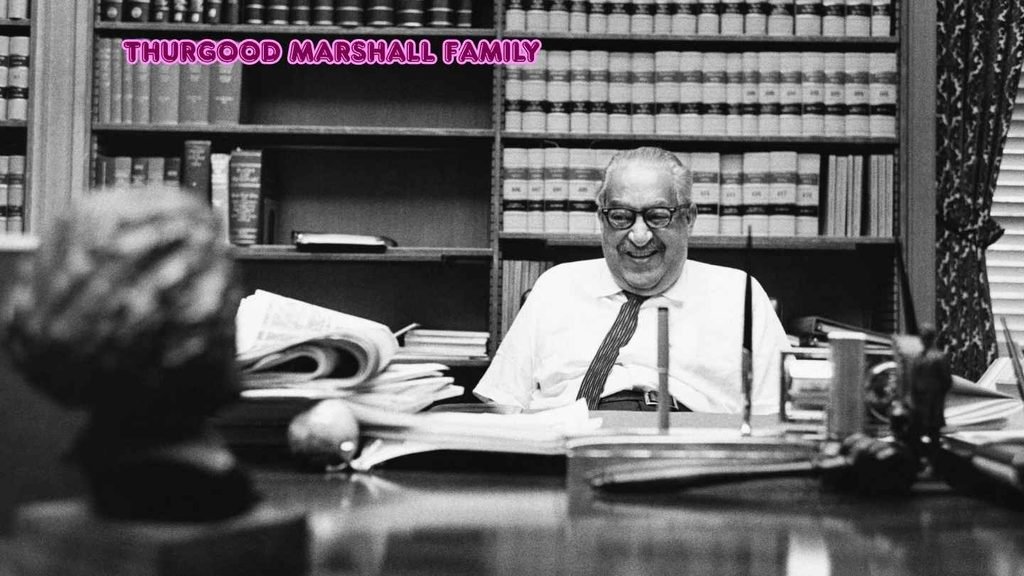
Thurgood Marshall came from a supportive family that helped shape his character and future ambitions. His parents, William Canfield Marshall and Norma Arica Williams, encouraged education and independent thinking. Their influence played an important role in his development, particularly during his childhood in Baltimore and his early years as a student.
Marshall was married twice during his life. His first wife was Vivian Burey, and after her death, he married Cecilia Suyat in 1955. He had two sons, Thurgood Marshall Jr. and John W. Marshall. His family remained an important part of his personal life while he worked to advance civil rights and equal justice in America.
He Was the First African American Supreme Court Justice
One of the most important interesting facts about Thurgood Marshall is that he became the first African American appointed to the United States Supreme Court.
President Lyndon B. Johnson nominated Marshall to the Supreme Court in 1967. His appointment was a historic moment because African Americans had faced generations of barriers in education, politics, and professional careers.
During his time on the Court, Marshall continued to support decisions involving individual rights, equality, and fairness. His position showed that the legal system could become more inclusive and that people from different backgrounds could contribute to the highest levels of government.
Best remembered for:
- Breaking racial barriers
- Expanding representation
- Inspiring future legal professionals
- Showing the importance of equal opportunity
He Won the Famous Brown v. Board of Education Case
Thurgood Marshall’s most famous legal achievement was leading the legal team that argued Brown v. Board of Education before the Supreme Court.
The case challenged racial segregation in public schools. At the time, many schools were separated by race, and African American students often received fewer educational opportunities.
In 1954, the Supreme Court ruled that segregation in public schools was unconstitutional. This decision became a major turning point in the civil rights movement.
Marshall’s argument showed how law could be used as a peaceful method for creating social change. His work helped millions of students gain greater access to equal education.
Best remembered for:
- Education equality
- Civil rights progress
- Landmark legal victories
- Changing American history
He Started His Career at the NAACP
Before becoming a Supreme Court Justice, Marshall spent many years working with the National Association for the Advancement of Colored People (NAACP).
As an attorney for the organization, he handled cases involving discrimination, voting rights, and unequal treatment. He traveled across the country, often representing people who had limited access to legal support.
Marshall believed that the courtroom could be a place where unfair systems could be challenged. His legal strategy helped create important changes without relying on violence or conflict.
His years at the NAACP built his reputation as one of the strongest civil rights lawyers in American history.
Best remembered for:
- Civil rights law
- Legal advocacy
- Equal protection cases
- Community support
He Faced Many Challenges Before Becoming Successful
Marshall’s success did not come easily. During his early life and career, he experienced racial discrimination that limited opportunities for many African Americans.
After graduating from college, he faced barriers when applying to law schools. He eventually attended Howard University School of Law, where he studied under the famous legal scholar Charles Hamilton Houston.
Marshall learned that strong legal arguments could challenge unfair systems. Instead of allowing obstacles to stop him, he used education and determination to move forward.
His journey shows that major achievements often come after years of hard work and persistence.
Best remembered for:
- Personal determination
- Overcoming barriers
- Commitment to education
- Professional courage
He Was Known for His Sharp Legal Skills
Marshall was respected for his ability to explain complex legal issues in a clear and convincing way.
He prepared carefully for cases and understood how laws affected ordinary people. His courtroom style combined strong research, logical arguments, and a deep understanding of human experiences.
Many legal experts consider him one of the greatest advocates in American history because of his success before the Supreme Court.
His approach demonstrated that effective communication and preparation are powerful tools for creating change.
Best remembered for:
- Courtroom excellence
- Legal strategy
- Clear communication
- Professional leadership
He Believed Education Was a Path to Equality
Education played an important role throughout Marshall’s life. He understood that knowledge could help people gain opportunities and challenge unfair systems.
His work in education cases showed his belief that every child deserved access to quality learning. He viewed education as a foundation for personal growth and social progress.
Marshall’s own life reflected this idea. Through education, he moved from facing limitations to becoming one of the most influential figures in American law.
Best remembered for:
- Equal education
- Learning opportunities
- Youth inspiration
- Social progress
He Served on the Supreme Court for More Than Two Decades
Marshall served as a Supreme Court Justice from 1967 until his retirement in 1991.
During his time on the Court, he participated in decisions involving civil rights, criminal justice, privacy, and individual freedoms.
Although judges may disagree on many issues, Marshall was known for his strong belief that the Constitution should protect the rights of all people.
His years of service helped shape important conversations about justice and equality in America.
Best remembered for:
- Supreme Court leadership
- Constitutional rights
- Public service
- Legal history
His Legacy Continues Around the World
The impact of Thurgood Marshall continues long after his death in 1993. Schools, universities, and organizations have honored him for his contributions to justice and equality.
Many young lawyers study his cases to understand how legal arguments can influence society. Civil rights leaders often recognize his work as an example of peaceful and meaningful change.
Marshall’s story remains relevant because issues of fairness, opportunity, and equal treatment continue to matter today.
Best remembered for:
- Inspiring future generations
- Civil rights history
- Leadership
- Equality movements
Why Thurgood Marshall Is Important in American History
Thurgood Marshall represents the idea that one person’s dedication can create opportunities for millions of others.
His life was not only about winning court cases. It was about challenging unfair systems and making the law work better for people who had been ignored or excluded.
His achievements remind us that progress often requires patience, knowledge, and courage. Marshall proved that legal action could become a powerful force for positive change.
How to Learn From Thurgood Marshall’s Life
There are many lessons people can take from Marshall’s experiences:
- Education can create new opportunities.
- Preparation helps overcome difficult challenges.
- Speaking up for fairness can make a difference.
- Long-term goals require patience and commitment.
- Leadership can come from serving others.
His story encourages students, professionals, and community members to believe that their actions can have a meaningful impact.
FAQs About Interesting Facts About Thurgood Marshall
What is the most famous fact about Thurgood Marshall?
The most famous fact about Thurgood Marshall is that he became the first African American Supreme Court Justice. Before that achievement, he gained national recognition for successfully arguing major civil rights cases, especially Brown v. Board of Education.
Why is Thurgood Marshall important?
Thurgood Marshall is important because he used the legal system to fight racial segregation and protect equal rights. His work helped change American laws and created opportunities for many people who faced discrimination.
What case made Thurgood Marshall famous?
Brown v. Board of Education made Thurgood Marshall widely known. His legal arguments helped convince the Supreme Court to declare racial segregation in public schools unconstitutional in 1954.
What was Thurgood Marshall’s job before becoming a Supreme Court Justice?
Before becoming a Supreme Court Justice, Marshall worked as a lawyer and civil rights advocate. He spent many years with the NAACP, where he handled important cases involving equality and constitutional rights.
What can students learn from Thurgood Marshall?
Students can learn the importance of education, determination, and standing up for fairness. Marshall’s life shows that knowledge and persistence can help people overcome challenges and create positive change.
Where was Thurgood Marshall born?
Thurgood Marshall was born in Baltimore, Maryland, on July 2, 1908. He grew up in a period when racial segregation and discrimination affected many aspects of daily life.
Why do people remember Thurgood Marshall today?
People remember Thurgood Marshall because of his historic legal victories, Supreme Court service, and commitment to equality. His work continues to influence discussions about justice and civil rights.
Final Thoughts: Why Interesting Facts About Thurgood Marshall Still Matter
The interesting facts about Thurgood Marshall reveal the story of a person who used education, law, and determination to create lasting change. His journey from a young student in Baltimore to the first African American Supreme Court Justice shows how courage and dedication can transform society.
Marshall’s legacy reminds us that progress is built by people who are willing to challenge unfairness and work for a better future. Learning about his life is not only a lesson in history but also an inspiration to make meaningful contributions in our own communities.

I am Ethan Brooks, a writer who enjoys exploring the power of words and emotions. I believe that a simple quote can change the way we think, inspire us to keep going, or bring a little peace to a difficult day. I write about life, motivation, success, friendship, and personal growth. My goal is to create meaningful words that readers can connect with and remember.
Books
- The Quiet Power of Words
- Small Thoughts, Big Changes
 Olivia Bennett