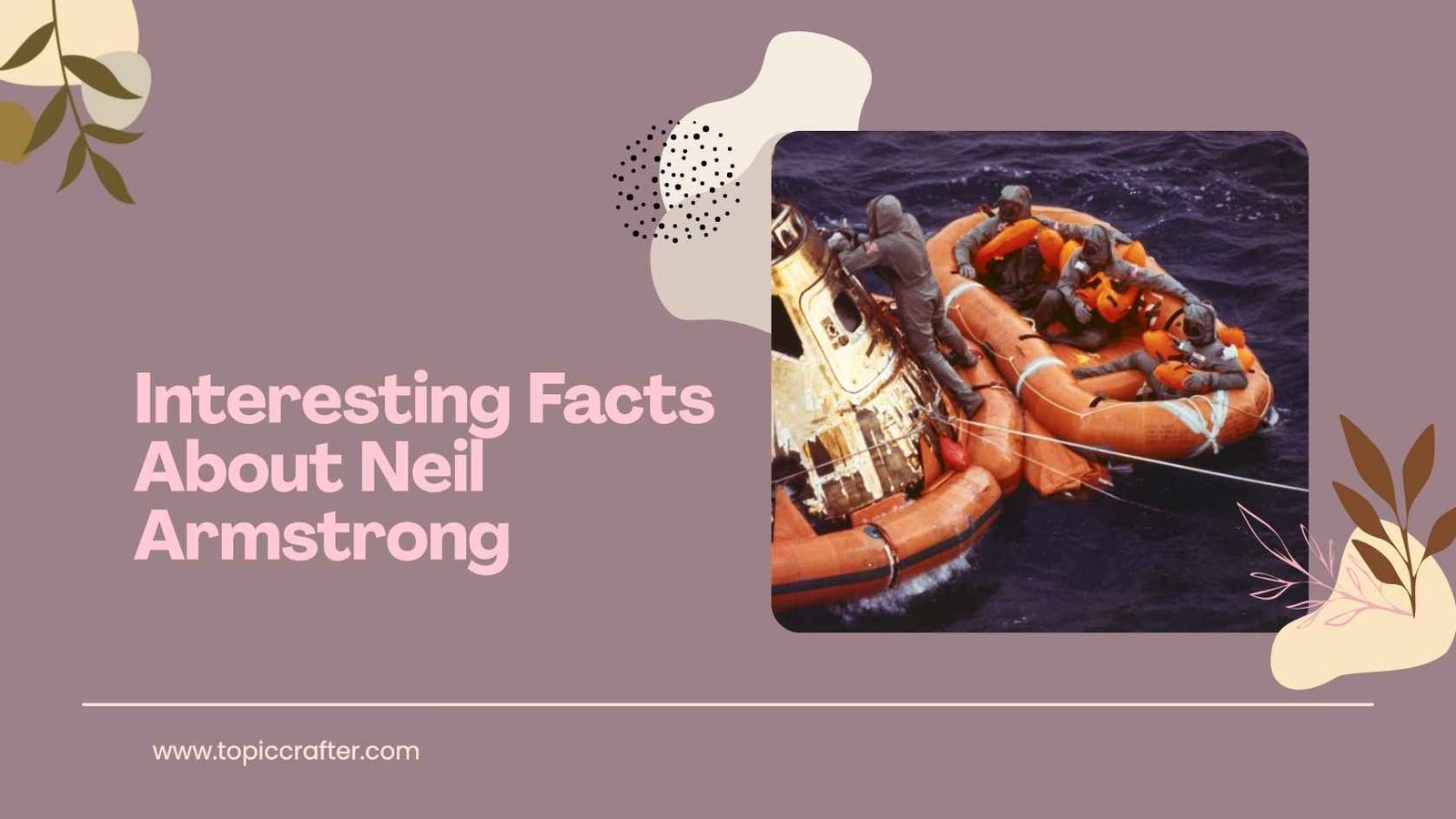
Few people in history have changed the way humanity views the universe quite like Neil Armstrong. As the first person to walk on the Moon during NASA’s Apollo 11 mission in 1969, Armstrong became a global symbol of courage, exploration, and scientific achievement.
His famous words, “That’s one small step for man, one giant leap for mankind,” continue to inspire generations of dreamers, scientists, and space enthusiasts.
While most people know Neil Armstrong as the first man on the Moon, his life was filled with remarkable achievements long before and after that historic mission.
From earning his pilot’s license as a teenager to becoming a respected engineer, professor, and astronaut, his journey is full of fascinating stories that often go unnoticed.
In this guide, you’ll discover 20 interesting facts about Neil Armstrong, along with his background, career, historical significance, lasting legacy, and answers to the most frequently asked questions about one of history’s greatest explorers.
Quick Facts About Neil Armstrong

| Fact | Details |
| Full Name | Neil Alden Armstrong |
| Born | August 5, 1930 |
| Birthplace | Wapakoneta, Ohio, USA |
| Died | August 25, 2012 |
| Nationality | American |
| Profession | Astronaut, Naval Aviator, Aerospace Engineer, Professor |
| Famous For | First human to walk on the Moon |
| Moon Mission | Apollo 11 |
| Moon Landing Date | July 20, 1969 |
| Time on Moon | About 2 hours and 31 minutes outside the spacecraft |
| Organization | NASA |
| Famous Quote | That’s one small step for man, one giant leap for mankind |
Neil Armstrong’s Background
Neil Armstrong was born in Wapakoneta, Ohio, and developed a fascination with aviation from a very young age. His father often took him to air shows, where Armstrong’s love for flying grew stronger. This early passion eventually led him to become one of the most accomplished pilots of his generation.
He studied aeronautical engineering at Purdue University and later served as a naval aviator during the Korean War. After his military service, Armstrong became a test pilot, flying some of the fastest and most advanced experimental aircraft ever built. His technical expertise and calm decision-making eventually earned him a place in NASA’s astronaut program.
The Journey That Led to the Moon
Neil Armstrong’s career followed an extraordinary path before he became a household name. He joined NASA’s astronaut corps in 1962 after years of testing experimental aircraft.
His first spaceflight came during the Gemini 8 mission in 1966. During that mission, a dangerous spacecraft malfunction caused the capsule to spin rapidly. Armstrong remained remarkably calm, successfully regaining control and safely ending the mission. His exceptional performance convinced NASA that he was well suited for future leadership roles.
Three years later, Armstrong commanded Apollo 11, becoming the first human being to step onto the lunar surface on July 20, 1969. His successful mission marked one of the greatest milestones in the history of science and exploration.
20 Interesting Facts About Neil Armstrong
1. He Earned His Pilot’s License Before He Could Drive
Neil Armstrong received his student pilot’s license at age 16—before obtaining his driver’s license. His dedication to aviation started much earlier than most people realize and shaped the rest of his life.
2. He Was an Eagle Scout
Armstrong achieved the rank of Eagle Scout in the Boy Scouts of America. Throughout his life, he credited scouting with helping him develop leadership, discipline, and problem-solving skills.
3. He Flew More Than 200 Different Aircraft
As a military and test pilot, Armstrong flew over 200 types of aircraft, including helicopters, jets, gliders, and rocket-powered experimental planes. Few pilots have matched this level of experience.
4. He Survived a Dangerous Gemini 8 Emergency
During Gemini 8, a malfunction caused the spacecraft to spin uncontrollably. Armstrong quickly identified the problem and used backup thrusters to stop the spin, saving both himself and fellow astronaut David Scott.
5. He Personally Piloted the Lunar Module to Safety
During Apollo 11’s landing, Armstrong noticed the planned landing site was covered with large rocks. He manually flew the lunar module to a safer location while fuel supplies ran dangerously low. His quick thinking prevented what could have become a mission-ending disaster.
6. He Took the First Human Step on Another World
On July 20, 1969, Armstrong became the first person to walk on the Moon. This achievement remains one of humanity’s greatest accomplishments in exploration.
7. The Famous Quote Was Almost Different
Although the famous quote is remembered as “That’s one small step for man,” Armstrong later explained he intended to say “one small step for a man.” Audio quality made the small word difficult to hear.
8. He Collected Moon Samples
Armstrong and Buzz Aldrin collected nearly 22 kilograms (about 48 pounds) of lunar rocks and soil. Scientists continue studying many of these samples today.
9. He Left Memorial Items on the Moon
Among the items left on the Moon were medals honoring astronauts and cosmonauts who lost their lives during space exploration, symbolizing international respect for those who advanced human spaceflight.
10. He Rarely Sought Fame
Despite becoming one of the world’s most recognizable people, Armstrong preferred a quiet life. He rarely gave interviews and avoided the celebrity lifestyle.
11. He Became a University Professor
After leaving NASA, Armstrong taught aerospace engineering at the University of Cincinnati for several years, sharing his knowledge with future engineers.
12. He Served During the Korean War
Before joining NASA, Armstrong flew 78 combat missions as a naval aviator during the Korean War. His military experience strengthened his leadership under pressure.
13. He Was an Outstanding Engineer
Armstrong viewed himself as an engineer first and an astronaut second. His technical expertise played a major role in NASA’s confidence in his abilities.
14. Apollo 11 Almost Ran Out of Fuel
The lunar module landed with only seconds of usable fuel remaining. Armstrong’s calm manual landing prevented a potentially catastrophic mission failure.
15. He Never Considered Himself a Hero
Armstrong consistently credited thousands of NASA engineers, scientists, and technicians for the Moon landing, emphasizing that space exploration was a team effort.
16. He Visited Many Countries After Apollo 11
Following the Moon landing, Armstrong participated in a worldwide goodwill tour, meeting millions of people and representing American achievements in science and exploration.
17. A Crater on the Moon Bears His Name
Scientists honored Armstrong by naming a lunar crater after him, ensuring his legacy remains permanently connected to the Moon.
18. His Spacesuit Was an Engineering Marvel
The Apollo spacesuit contained multiple protective layers, advanced life-support systems, and communication equipment, allowing Armstrong to survive the Moon’s harsh environment.
19. He Received Numerous Awards
Armstrong earned the Presidential Medal of Freedom, Congressional Space Medal of Honor, Congressional Gold Medal, and many international honors recognizing his extraordinary achievements.
20. His Legacy Continues to Inspire Future Space Exploration
Today’s Artemis missions, private space companies, and future lunar exploration programs continue building upon the foundation established by Armstrong and the Apollo generation.
Neil Armstrong’s Influence on Science and Society
Neil Armstrong’s Moon landing inspired millions of young people to pursue careers in science, technology, engineering, and mathematics (STEM). Universities experienced increased interest in engineering programs following Apollo 11, while governments invested more heavily in scientific research.
His achievements also demonstrated what international cooperation and technological innovation could accomplish, encouraging future space exploration efforts around the world.
Neil Armstrong’s Lasting Legacy

More than five decades after Apollo 11, Neil Armstrong remains one of history’s most respected explorers. Museums, schools, airports, scholarships, and research institutions continue honoring his contributions to science and humanity.
His legacy extends far beyond becoming the first person on the Moon. Armstrong represents curiosity, humility, determination, and the belief that extraordinary goals can be achieved through teamwork, preparation, and perseverance.
Frequently Asked Questions
Why is Neil Armstrong famous?
Neil Armstrong is famous for becoming the first human to walk on the Moon during NASA’s Apollo 11 mission on July 20, 1969.
How old was Neil Armstrong when he walked on the Moon?
Neil Armstrong was 38 years old when he made his historic Moon walk.
What was Neil Armstrong’s famous quote?
His famous quote is, “That’s one small step for man, one giant leap for mankind.”
How long did Neil Armstrong stay on the Moon?
He spent approximately 2 hours and 31 minutes walking and working on the lunar surface.
Did Neil Armstrong fly before becoming an astronaut?
Yes. He was a naval aviator, combat pilot, and highly experienced test pilot before joining NASA.
What happened to Neil Armstrong after Apollo 11?
After leaving NASA, he became a professor of aerospace engineering, served on various government commissions, and lived a relatively private life.
What is Neil Armstrong’s greatest legacy?
His greatest legacy is proving that humans could safely travel to another world, inspiring generations of explorers, scientists, and engineers.
Conclusion
Neil Armstrong’s life was defined by courage, intelligence, and humility. While history remembers him as the first person to walk on the Moon, his achievements as a pilot, engineer, astronaut, educator, and leader are equally remarkable.
The interesting facts about Neil Armstrong reveal a man who combined technical brilliance with quiet determination, making one of humanity’s greatest accomplishments possible.
His journey continues to inspire people of all ages to dream bigger, explore further, and believe that even the most ambitious goals can become reality through dedication and teamwork.

I am Olivia Bennett, a writer and quote enthusiast who loves turning everyday experiences into meaningful words. I believe that inspiration can be found in the smallest moments of life. Through my writing, I share thoughts about love, happiness, relationships, confidence, and hope. I want every quote I write to give readers something positive to think about.
Books
- Words That Touch the Heart
- Moments Worth Remembering
 Ethan Brooks