
Barbara Walters was much more than a familiar face on American television. She was a pioneering journalist who changed the way women participated in broadcast news and became one of the most recognizable interviewers in television history.
From interviewing presidents and international leaders to creating the popular daytime talk show The View, Walters built a remarkable career spanning more than five decades.
But there is much more to her story than her professional achievements. Her childhood in a show-business family, unusual career beginnings, memorable celebrity interviews, and personal experiences reveal a fascinating side of her life.
If you’re looking for interesting facts about Barbara Walters, here are 20 details that help explain her personality, accomplishments, and lasting influence on American television.
Interesting Facts About Barbara Walters
1. Her Father Was a Famous Nightclub Owner
Barbara Walters grew up in a family connected to the entertainment business. Her father, Lou Walters, was a theatrical producer and nightclub entrepreneur who founded the famous Latin Quarter nightclub.
The business operated in several major American cities, including New York, Boston, and Miami.
Because of her father’s profession, Walters encountered performers and celebrities from a young age. She was exposed to the entertainment industry long before she became a television personality herself.
This unusual childhood gave her an early understanding of the entertainment world and the personalities who worked in it.
2. She Grew Up Around Celebrities
Many journalists spend years trying to gain access to famous personalities. Walters, however, experienced something different during her childhood.
Her father’s nightclub business brought performers and entertainers into her family’s social environment.
She witnessed the difference between how celebrities presented themselves onstage and how they behaved away from the spotlight.
This exposure helped develop her curiosity about human behavior. She became interested in understanding what motivated people and what existed beneath their public images.
That curiosity eventually became one of the defining characteristics of her interviewing style.
3. Her Childhood Was Marked by Frequent Moves
Walters did not have the kind of stable childhood many people associate with growing up in one hometown.
Her family moved between cities because of her father’s business activities. She spent parts of her childhood in Boston, Miami, and New York.
These moves meant changing schools and adjusting to unfamiliar environments.
Walters later discussed her childhood experiences, including the challenges of attending several schools and struggling to fit in.
Her early experiences helped shape her understanding of people from different backgrounds.
4. She Graduated With an English Degree
Walters attended Sarah Lawrence College in New York and graduated in 1953 with a bachelor’s degree in English.
Interestingly, she did not begin her professional journey with a formal journalism degree.
Her education nevertheless gave her a strong foundation in writing, communication, and language.
These skills became particularly valuable in television, where journalists must explain complicated subjects clearly and prepare effective interview questions.
Her career demonstrated that practical experience, communication skills, and determination could open doors in an industry where women faced significant barriers.
5. She Initially Worked Behind the Camera
Before becoming a recognizable television personality, Walters worked behind the scenes.
She started her television career in New York after graduating from college. Her early responsibilities included publicity, writing, producing, and preparing television segments.
She also gained experience working on local television programming.
Her experience as a writer and producer helped her understand how television programs were organized and how stories were presented to viewers.
Eventually, she moved into more visible reporting roles, setting the stage for her national television career.
6. She Became the First Female Co-Host of NBC’s Today Show
One of Walters’ most important professional achievements came in 1974.
She became the first woman to hold the official co-host title on NBC’s Today show.
Before receiving that recognition, she had worked as a writer, researcher, and reporter for the program.
At the time, women in television morning news were often assigned limited roles, including reading commercials, presenting lighter stories, and appearing in segments that were considered less serious.
Walters gradually earned greater responsibilities through her reporting skills and popularity with viewers.
Her promotion represented an important step toward greater opportunities for women in broadcast journalism.
7. She Made History With a $1 Million Annual Salary
In 1976, Walters joined ABC News and became the first woman to co-anchor an American network evening newscast.
She worked alongside Harry Reasoner on ABC Evening News.
Her reported annual salary was an unprecedented $1 million, attracting considerable attention throughout the broadcasting industry.
The salary was particularly significant because television news had traditionally been dominated by male journalists.
Her appointment and compensation demonstrated how valuable she had become to a major American television network.
Although her partnership with Reasoner was professionally challenging, her historic position permanently changed expectations about women’s roles in network news.
8. She Interviewed Presidents and International Leaders
Walters developed a reputation for interviewing some of the most influential people in the world.
Her subjects included American presidents, foreign heads of state, political leaders, entertainers, and major cultural personalities.
She interviewed every American president and first lady from the Nixon era through the Obama era.
Her international interviews included conversations with Fidel Castro, Margaret Thatcher, Boris Yeltsin, and other prominent political figures.
These interviews gave viewers opportunities to hear directly from people whose decisions influenced international affairs.
Her ability to secure conversations with powerful individuals became one of the most recognizable parts of her professional identity.
9. She Arranged a Historic Joint Interview Between Two Middle Eastern Leaders
One of Walters’ most important journalistic accomplishments occurred in November 1977.
She arranged the first joint television interview with Egyptian President Anwar Sadat and Israeli Prime Minister Menachem Begin.
The interview was particularly significant because relations between Egypt and Israel were extremely sensitive.
Bringing the two leaders together for a televised conversation was an extraordinary journalistic achievement.
The interview demonstrated Walters’ ability to secure access to influential figures and create television moments with international importance.
It also helped establish her reputation as a journalist capable of handling major political subjects.
10. Her Monica Lewinsky Interview Became a Television Ratings Milestone
In March 1999, Walters interviewed Monica Lewinsky for ABC’s 20/20.
Lewinsky had become internationally known because of her relationship with President Bill Clinton and the resulting political scandal.
The interview attracted enormous public attention.
The two-hour broadcast became one of the most-watched news interviews in American television history.
The interview demonstrated how Walters could turn a major national news story into a widely watched television event.
It remains one of the most recognizable interviews of her career.
11. She Created the Popular Talk Show The View
Walters was not only an interviewer and news anchor. She was also a television creator and producer.
In 1997, she launched The View, a daytime talk show featuring women from different backgrounds and generations discussing current events, entertainment, and everyday issues.
The program introduced a panel-based format in which several women could express different opinions during the same discussion.
Walters helped establish the show’s identity and served as one of its original co-hosts.
She retired from regular on-camera duties in 2014, although her connection to the program continued through her executive-producing role.
The show became one of her most enduring contributions to American daytime television.
12. She Wrote a Revealing Autobiography Called Audition
In 2008, Walters published her autobiography, Audition.
The book explored her professional journey and personal experiences, including her difficult childhood, relationships, ambitions, and struggles to establish herself in television.
Its title reflected a recurring theme in her life: the feeling that she was continually trying to prove herself and earn acceptance.
Rather than presenting only her professional achievements, Walters offered readers a more personal look at the experiences that shaped her.
The autobiography became an important source for understanding her life beyond the television screen.
13. She Had an Older Sister Named Jacqueline
Walters had an older sister named Jacqueline who was born with a developmental disability.
Her relationship with her sister was an important part of her family history.
She later named her adopted daughter Jacqueline Dena, reflecting the significance of her sister and mother in her life.
Walters also discussed the difficulties surrounding her sister’s disability and her own complicated feelings during childhood.
This family experience helps explain why the name Jacqueline held special meaning for her.
14. She Adopted Her Only Daughter After Experiencing Miscarriages
Walters and her second husband, theatrical producer Lee Guber, adopted a baby girl in 1968.
They named her Jacqueline Dena Guber.
The adoption followed several miscarriages, a deeply personal experience Walters discussed in later accounts of her life.
Walters chose the name Jacqueline after her older sister and Dena after her mother.
Although Walters became a highly successful journalist, she also experienced the challenges of balancing motherhood with a demanding television career.
Her daughter remained an important part of her personal life.
15. Her Career Sometimes Made Family Life Difficult
Walters was known for her extraordinary professional commitment.
However, the demands of television journalism sometimes created difficulties in her personal relationships.
Her work required travel, preparation, long hours, and constant attention to major news developments.
In interviews and her memoir, she reflected on the challenges of balancing her career with marriage and motherhood.
Her relationship with her daughter also experienced difficulties during certain periods, although the two later became closer.
This part of her story reveals that even highly successful public figures can struggle to balance professional ambitions with family responsibilities.
16. She Was Married to Three Different Men
Walters had three husbands during her life.
Her marriages were to:
- Robert Henry Katz: A business executive whom she married in 1955. Their marriage ended in the 1950s.
- Lee Guber: A theatrical producer whom she married in 1963. They divorced in 1976 and adopted Jacqueline together.
- Merv Adelson: A television and entertainment executive whom she married in 1986. Their marriage ended in 1992.
Her relationships were sometimes discussed in her autobiography, Audition.
Walters was open about the fact that her personal life did not always run as smoothly as her professional career.
She never remarried after her marriage to Adelson ended.
17. She Had a Memorable and Controversial Interview With Dolly Parton
One of Walters’ most frequently discussed celebrity interviews involved country music star Dolly Parton.
During their 1977 conversation, Walters questioned Parton’s appearance, blonde wigs, revealing clothing, and public image.
At one point, Walters asked whether Parton felt like a joke because people made fun of her appearance.
Parton responded confidently, explaining that she understood her image and was comfortable with her choices.
The exchange has attracted renewed attention over the years, particularly as viewers revisit old television interviews and evaluate how celebrities were questioned.
Parton’s calm and humorous responses helped make the conversation memorable.
The interview also demonstrates Walters’ sometimes confrontational approach to celebrity journalism.
18. Her Estimated Net Worth Reached $170 Million
Walters spent decades working in television, earning money through journalism, hosting, producing, and writing.
She also held important positions at NBC and ABC, two of America’s most influential television networks.
Her professional work included Today, ABC Evening News, 20/20, The View, and numerous television specials.
Celebrity Net Worth estimates that Barbara Walters had a fortune of approximately $170 million at the time of her death.
However, this figure should be treated as an unofficial estimate. Walters did not publish a verified personal financial statement confirming that amount.
Her long career, historic television contracts, and production work help explain why estimates of her wealth were substantial.
19. She Received Major Recognition for Her Contributions to Television
Walters’ influence was recognized by important television and journalism organizations.
She was inducted into the Television Academy Hall of Fame in 1989.
She also received the International Women’s Media Foundation’s Lifetime Achievement Award in 1992.
Her career included multiple Emmy nominations and wins, reflecting her work across television journalism and programming.
These honors recognized not only her interviewing skills but also her contribution to expanding opportunities for women in broadcast media.
Her achievements made her one of the most influential female journalists in American television history.
20. She Worked in Television for More Than Five Decades
Walters’ television career lasted for more than 50 years.
She began in the 1950s and continued working in television until her retirement from regular on-camera appearances in 2014.
Throughout those decades, she witnessed enormous changes in American broadcasting, including the growth of cable television, the expansion of celebrity journalism, and the arrival of digital media.
Her work connected several generations of television audiences with major political figures, entertainers, and newsmakers.
Even after her retirement, her interviews and television programs continued to attract attention.
Her influence remains an important part of the history of American broadcast journalism.
Barbara Walters’ Early Life and Childhood
Barbara Walters was born on September 25, 1929, in Boston, Massachusetts.
Her parents were Lou Walters and Dena Walters. Her father was a nightclub entrepreneur whose work frequently required the family to move between cities.
As a result, Walters experienced an unconventional childhood. She attended different schools and spent time in Boston, New York, and Miami.
She graduated from Miami Beach High School in 1947 before attending Sarah Lawrence College.
After earning her English degree in 1953, she began pursuing opportunities in television.
Her early professional experiences included writing, publicity, and producing, eventually leading to a position at NBC.
The combination of her education, determination, and early exposure to entertainment helped shape the journalist she would become.
Barbara Walters’ Groundbreaking Television Career
Walters became one of the most recognizable television journalists in America because she was willing to pursue difficult interviews and establish herself in an industry that offered limited opportunities to women.
Her career included several important programs.
Today: Her work at NBC helped her become the first female co-host of the morning program.
ABC Evening News: In 1976, she became the first woman to co-anchor a network evening newscast in the United States.
20/20: She joined the newsmagazine in 1979 and became one of its best-known personalities.
The View: She created the daytime talk show in 1997, helping establish a new format for discussions about news and entertainment.
Her professional achievements were accompanied by memorable interviews with world leaders, celebrities, and controversial public figures.
These programs helped establish her reputation as a journalist who could attract both important guests and large audiences.
Barbara Walters’ Daughter and Family Life
Barbara Walters’ only child was Jacqueline Dena Guber, whom she adopted with her second husband, Lee Guber, in 1968.
The name Jacqueline honored Walters’ older sister, while Dena honored her mother.
Walters’ relationship with her daughter was not always easy. Her demanding television career and the pressures of family life sometimes created emotional distance.
Jacqueline experienced difficulties during her teenage years but later established her own life away from the public spotlight.
She also founded New Horizons for Young Women, a wilderness-based program intended to help struggling teenage girls.
Unlike her mother, Jacqueline generally chose to maintain a private life rather than pursue celebrity attention.
Barbara Walters’ Marriages
Walters’ romantic life included three husbands and several complicated personal relationships.
Her first husband was Robert Henry Katz, whom she married in 1955.
In 1963, she married theatrical producer Lee Guber. Their marriage lasted until 1976, and they adopted their daughter Jacqueline together.
Her third husband was television producer and entertainment executive Merv Adelson. They married in 1986 and divorced in 1992.
Walters later reflected on her relationships in her autobiography, explaining that her professional ambitions sometimes made personal relationships difficult.
Her marriage history is an important part of understanding the personal sacrifices and challenges that accompanied her career.
Barbara Walters and Dolly Parton’s 1977 Interview
The 1977 interview between Walters and Dolly Parton is still discussed because of the questions surrounding Parton’s appearance and public image.
Walters asked why Parton wore blonde wigs and extravagant clothing when she was already beautiful.
She also questioned whether Parton felt people treated her as a joke.
Parton explained that her appearance was a deliberate choice and that she was comfortable with her identity and talent.
Her responses showed that she understood how her public image worked and was not embarrassed by it.
Did Barbara Walters Ever Apologize to Dolly Parton?
There is no reliable, publicly documented confirmation that Walters formally apologized to Parton for the interview.
The conversation has been revisited in later coverage, and some viewers have criticized Walters’ questioning as unnecessarily personal or judgmental.
However, it would be inaccurate to claim that a confirmed apology took place without evidence.
The most responsible conclusion is that the interview remains controversial, but a formal apology has not been established by the credible sources reviewed.
Barbara Walters’ Net Worth
Barbara Walters accumulated substantial wealth through her long television career.
Her work as a journalist, anchor, television host, producer, and author provided several sources of income.
Her reported $1 million annual salary in 1976 was particularly notable because it was considered unprecedented for a female network news anchor at the time.
Celebrity Net Worth estimates her fortune at approximately $170 million.
It is important to remember that this is a third-party estimate rather than an officially verified estate valuation.
Nevertheless, her decades of television work and successful production projects help explain her considerable financial success.
What Happened to Barbara Walters?
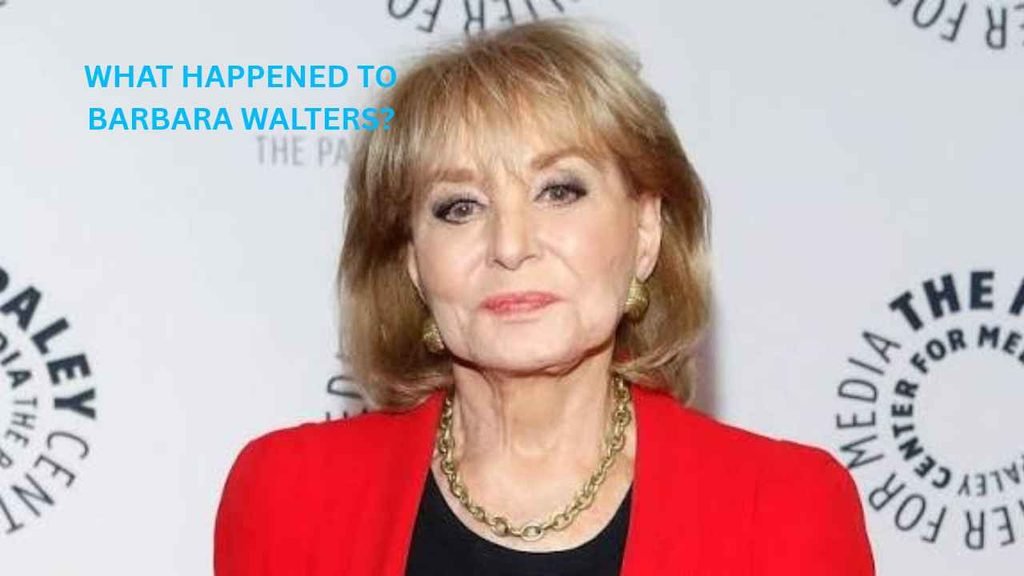
Barbara Walters died on December 30, 2022, at her home in New York City. She was 93 years old.
Her death was announced by ABC News and confirmed by her representative.
The announcement described her as a trailblazer for women in journalism and television.
Although Walters had retired from regular television appearances years earlier, her professional influence remained widely recognized.
Her passing marked the end of a remarkable career that had transformed American broadcast journalism and opened opportunities for future generations of female journalists.
Regarding the cause of death, no specific official medical cause was publicly disclosed in the initial announcement. It is therefore best not to attribute her death to a particular disease or medical condition without reliable confirmation.
Barbara Walters left behind a legacy of historic interviews, groundbreaking television programs, and professional achievements that continue to influence the media industry.
For readers interested in the history of American television, her life offers an extraordinary example of determination, ambition, and journalistic influence.
Frequently Asked Questions About Barbara Walters
1. What Was Barbara Walters’ Cause of Death?
Barbara Walters died on December 30, 2022, at age 93. Her death was confirmed by ABC News and her representative. A specific medical cause of death was not publicly disclosed in the initial announcement.
2. What Happened to Barbara Walters?
Barbara Walters passed away at her home in New York City in December 2022. She had retired from regular television appearances in 2014 after a career spanning more than five decades.
3. How Old Was Barbara Walters When She Died?
Barbara Walters was 93 years old when she died. She was born on September 25, 1929, and passed away on December 30, 2022.
4. Who Was Barbara Walters’ Daughter?
Her daughter was Jacqueline Dena Guber, whom she adopted with her second husband, Lee Guber, in 1968. Jacqueline was named after Walters’ older sister and her mother.
5. Who Was Barbara Walters Married To?
Barbara Walters was married to Robert Henry Katz, theatrical producer Lee Guber, and television executive Merv Adelson. Her marriages ended in divorce.
6. What Was Barbara Walters’ Net Worth?
Her net worth was estimated at approximately $170 million at the time of her death, according to Celebrity Net Worth. This is an unofficial estimate rather than a verified financial disclosure.
7. Did Barbara Walters Apologize to Dolly Parton?
No reliable public record confirms a formal apology. Their 1977 interview became controversial because of Walters’ questions about Parton’s appearance and public image.
8. What Was Barbara Walters Famous For?
She was famous for her groundbreaking work as a television journalist, her interviews with presidents and celebrities, her role on 20/20, and creating The View. She was also the first woman to co-anchor an American network evening newscast.
9. Did Barbara Walters Have a Journalism Degree?
No. She graduated from Sarah Lawrence College in 1953 with a bachelor’s degree in English. She developed her journalism skills through practical experience in television writing, producing, and reporting.
10. When Did Barbara Walters Retire?
Walters retired from regular co-hosting duties on The View in 2014. She continued to be associated with the program as an executive producer.
Conclusion
Barbara Walters was a remarkable journalist whose career changed American television. From becoming the first female co-host of NBC’s Today to creating The View, she repeatedly challenged traditional expectations and opened doors for women in broadcasting.
Her interviews with presidents, international leaders, and celebrities demonstrated her ability to connect with people from different backgrounds. Her personal experiences, including her childhood, marriages, and relationship with her daughter, also reveal the human side of a woman who spent much of her life in the public eye.

I am Olivia Bennett, a writer and quote enthusiast who loves turning everyday experiences into meaningful words. I believe that inspiration can be found in the smallest moments of life. Through my writing, I share thoughts about love, happiness, relationships, confidence, and hope. I want every quote I write to give readers something positive to think about.
Books
- Words That Touch the Heart
- Moments Worth Remembering
 Daniel Carter