
Few American presidents have lived a life as adventurous, influential, and fascinating as Theodore “Teddy” Roosevelt. He was a soldier, rancher, conservationist, explorer, author, and the youngest person ever to become President of the United States. More than a century after leaving office, Roosevelt remains one of the most admired figures in American history.
People often remember him for his famous quote, “Speak softly and carry a big stick,” but there is much more to his story. From surviving an assassination attempt to preserving millions of acres of public land, Roosevelt lived a life that seemed larger than fiction.
This guide explores the most interesting facts about Teddy Roosevelt, his background, historical significance, and the lasting impact he continues to have on American culture and leadership.
Quick Facts About Teddy Roosevelt
| Detail | Information |
| Full Name | Theodore Roosevelt Jr. |
| Nickname | Teddy Roosevelt |
| Born | October 27, 1858 |
| Birthplace | New York City, USA |
| Died | January 6, 1919 |
| Presidency | 1901–1909 |
| Political Party | Republican |
| Vice President | Charles W. Fairbanks (second term) |
| Famous For | Conservation, Progressive reforms, Big Stick diplomacy |
| Awards | Nobel Peace Prize (1906) |
| Notable Achievement | Created five national parks and protected millions of acres of land |
Background and Early Life
Theodore Roosevelt was born into a wealthy family in New York City. Despite his privileged upbringing, his childhood was far from easy. He suffered from severe asthma and was often physically weak.
Rather than allowing his illness to define him, Roosevelt adopted what he called “the strenuous life.” He exercised intensely, boxed, lifted weights, and spent years building his physical strength. This determination became a defining characteristic throughout his life.
Roosevelt graduated from Harvard University in 1880 and quickly entered politics. His career included serving as a New York state legislator, Assistant Secretary of the Navy, Governor of New York, Vice President, and eventually President of the United States.
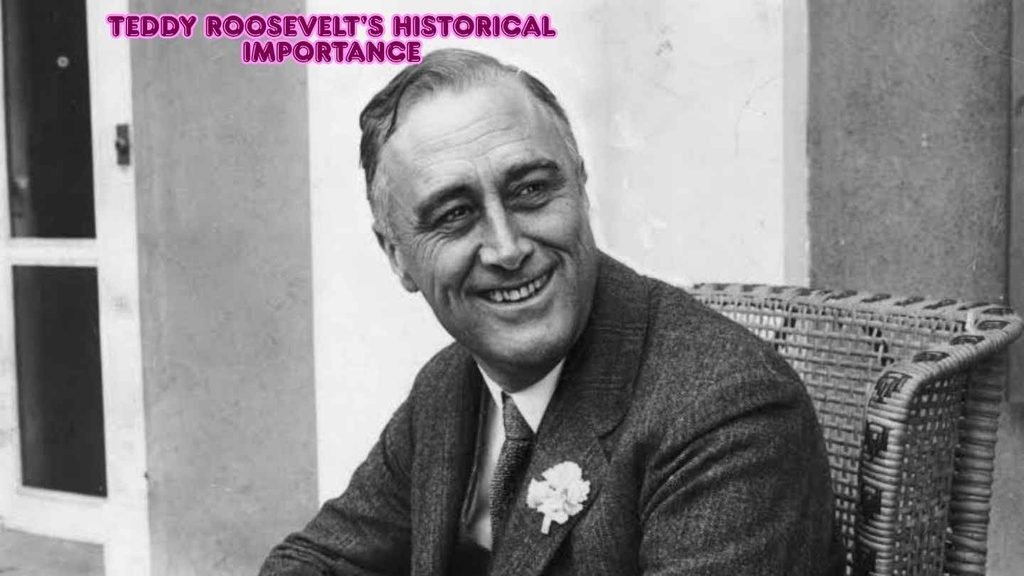
Teddy Roosevelt’s Historical Importance
Teddy Roosevelt transformed the presidency into a more active and influential office. Before him, many presidents took a limited role in national affairs. Roosevelt believed the president should actively solve problems and lead the nation.
His administration focused on:
- Breaking up monopolies.
- Protecting consumers.
- Conserving natural resources.
- Expanding America’s global influence.
- Improving labor conditions.
Many historians consistently rank him among the top five U.S. presidents because of his leadership style and long-lasting reforms.
20 Interesting Facts About Teddy Roosevelt
1. Teddy Roosevelt Was the Youngest U.S. President
Roosevelt became president at just 42 years old after President William McKinley was assassinated in 1901.
This fact is often confused with John F. Kennedy, who was the youngest elected president. Roosevelt remains the youngest person ever to assume the office, bringing extraordinary energy and ambition to the White House.
2. He Survived an Assassination Attempt
In 1912, while campaigning for president, Roosevelt was shot in the chest by a gunman in Milwaukee.
A folded speech manuscript and his eyeglass case slowed the bullet. Remarkably, Roosevelt delivered a 90-minute speech before seeking medical attention, telling the crowd, “It takes more than that to kill a Bull Moose.”
3. He Won the Nobel Peace Prize
Roosevelt became the first American to receive the Nobel Peace Prize in 1906.
He earned the honor for helping negotiate peace between Russia and Japan after the Russo-Japanese War. His diplomatic efforts demonstrated that he was not only a strong leader but also an effective peacemaker.
4. He Was a Published Author
Teddy Roosevelt wrote approximately 40 books during his lifetime.
His works covered history, politics, nature, hunting, and personal experiences. Few presidents have been as productive in literature, and his writings continue to provide valuable insights into his worldview.
5. He Created the Modern Conservation Movement
Roosevelt protected roughly 230 million acres of public land during his presidency.
He established:
- Five national parks
- Eighteen national monuments
- Fifty-one bird reserves
- More than 150 national forests
Without Roosevelt’s efforts, many of America’s most beautiful landscapes might have been lost to development.
6. Teddy Roosevelt Was a Cowboy
After losing both his wife and mother on the same day in 1884, Roosevelt moved to the Dakota Territory.
There, he worked as a rancher and cowboy. He herded cattle, hunted outlaws, and embraced frontier life. This experience shaped his character and strengthened his appreciation for the American West.
7. He Helped Build the Panama Canal
Roosevelt played a major role in the construction of the Panama Canal.
The canal revolutionized global trade by connecting the Atlantic and Pacific Oceans. His involvement reflected his belief that America should play an active role on the world stage.
8. He Loved Boxing
Roosevelt was an enthusiastic boxer throughout much of his life.
He practiced the sport while attending Harvard and continued boxing in the White House. Eventually, an injury during a boxing match caused him to lose sight in one eye, though he rarely discussed it publicly.
9. The Teddy Bear Is Named After Him
One of the world’s most beloved toys owes its name to Theodore Roosevelt.
The story began after Roosevelt refused to shoot a bear that had been tied to a tree during a hunting trip. Newspapers published political cartoons about the incident, inspiring toy makers to create “Teddy’s Bear.”
10. He Had an Extraordinary Memory
Roosevelt possessed a near-photographic memory.
Friends and colleagues often remarked that he could recall entire books, conversations, and historical details years later. This ability helped him excel as a writer, historian, and politician.
11. He Was an Adventurer in the Amazon
After leaving office, Roosevelt embarked on an expedition through the Amazon rainforest.
The journey nearly killed him. He contracted tropical diseases and suffered severe injuries. Nevertheless, he documented the experience in his book Through the Brazilian Wilderness.
12. He Read Constantly
Roosevelt reportedly read one or more books every day.
Even during his presidency, he found time to read extensively. His interests ranged from military history to science, making him one of the most intellectually curious leaders in American history.
13. He Was Vice President for Only a Few Months
Roosevelt became vice president in March 1901.
Many political leaders believed moving him to the vice presidency would reduce his influence. Instead, McKinley’s assassination six months later unexpectedly elevated Roosevelt to the presidency.
14. He Established National Monuments
Roosevelt used the Antiquities Act of 1906 more aggressively than any president before him.
He designated landmarks such as the Grand Canyon as protected areas. At the time, some critics opposed these actions, but they are now widely praised as visionary decisions.
15. He Led the Rough Riders
During the Spanish-American War, Roosevelt resigned from his government position to fight alongside the Rough Riders.
The volunteer cavalry unit became famous after the Battle of San Juan Hill. His military service significantly increased his popularity and helped launch his national political career.
16. He Had Six Children
The Roosevelt household was known for being lively and chaotic.
His children played pranks throughout the White House, including bringing pets into official spaces. Family stories from this period provide a unique glimpse into presidential life.
17. The White House Became More Modern Under Roosevelt
Roosevelt oversaw major renovations of the White House.
He expanded office space and officially named the executive residence the “White House” in government documents. Many aspects of the modern presidential workplace originated during his administration.
18. He Championed Consumer Protection
Roosevelt pushed for important reforms after the publication of The Jungle by Upton Sinclair.
These efforts led to the Meat Inspection Act and the Pure Food and Drug Act in 1906, significantly improving food safety standards in the United States.
19. He Ran as a Third-Party Candidate
In 1912, Roosevelt created the Progressive Party, commonly called the Bull Moose Party.
Although he lost the election, his campaign remains one of the most successful third-party efforts in American history. His platform promoted women’s suffrage, labor rights, and social reforms.
20. He Continues to Influence Leaders Today
More than 100 years after his death, Roosevelt’s leadership philosophy remains influential.
Business executives, military leaders, historians, and politicians frequently study his speeches and writings. His emphasis on courage, responsibility, and public service continues to resonate with people worldwide.
Teddy Roosevelt’s Legacy and Cultural Impact
Teddy Roosevelt occupies a unique place in American culture. He symbolizes determination, resilience, and adventure.
His image appears in:
- History books
- Museums
- Films and documentaries
- Mount Rushmore
- Children’s stories about the Teddy Bear
Roosevelt’s “strenuous life” philosophy continues to inspire individuals to embrace challenges and pursue meaningful goals.
He also helped redefine masculinity in the early twentieth century, emphasizing physical fitness, intellectual growth, and civic responsibility.
Famous Places Associated With Teddy Roosevelt
Several historic sites preserve Roosevelt’s legacy:
Theodore Roosevelt National Park
Located in North Dakota, this national park honors Roosevelt’s connection to the American West. Visitors can explore scenic landscapes, wildlife, and his former ranching region.
Sagamore Hill
Often called the “Summer White House,” Sagamore Hill in New York served as Roosevelt’s home for many years.
Mount Rushmore
Roosevelt’s face appears alongside George Washington, Thomas Jefferson, and Abraham Lincoln, reflecting his importance in American history.
Theodore Roosevelt Birthplace National Historic Site
Located in Manhattan, this site commemorates his early years and family history.
Teddy Roosevelt’s Modern Impact
Roosevelt’s influence extends well beyond history classrooms.
His conservation policies continue to shape environmental protection efforts. Modern national parks, wildlife preservation programs, and public land initiatives can trace part of their origins to his administration.
His approach to leadership has also influenced generations of public officials. Concepts such as executive leadership, government accountability, and consumer protection remain central to political discussions today.
Additionally, Roosevelt’s writings on perseverance and citizenship continue to be quoted in schools, leadership seminars, and business conferences around the world.
What Was Roosevelt Famous For?
Franklin D. Roosevelt, often known as FDR, was famous for leading the United States through two of the most challenging periods in modern history: the Great Depression and World War II. He became the 32nd president of the United States in 1933 and introduced the New Deal, a series of programs designed to help struggling Americans, create jobs, and improve the country’s economy.
Roosevelt is also remembered for his strong leadership, public radio speeches known as “fireside chats,” and efforts to support the Allied nations during World War II. His presidency had a lasting impact on American politics, the economy, and the role of the federal government.
What Was Hitler’s Reaction to Roosevelt’s Death?
When Franklin D. Roosevelt died on April 12, 1945, Adolf Hitler was nearing the end of his rule as Nazi Germany faced defeat in World War II. Hitler reportedly viewed Roosevelt’s death as a potentially favorable development for Germany because he hoped it might create uncertainty or weaken cooperation among the Allied leaders.
However, Roosevelt’s death did not change the course of the war in Germany’s favor. Vice President Harry S. Truman immediately became president, and the United States continued its military efforts alongside Britain and the Soviet Union. Germany surrendered less than a month later, on May 8, 1945.
Who Served as President for 12 Years?
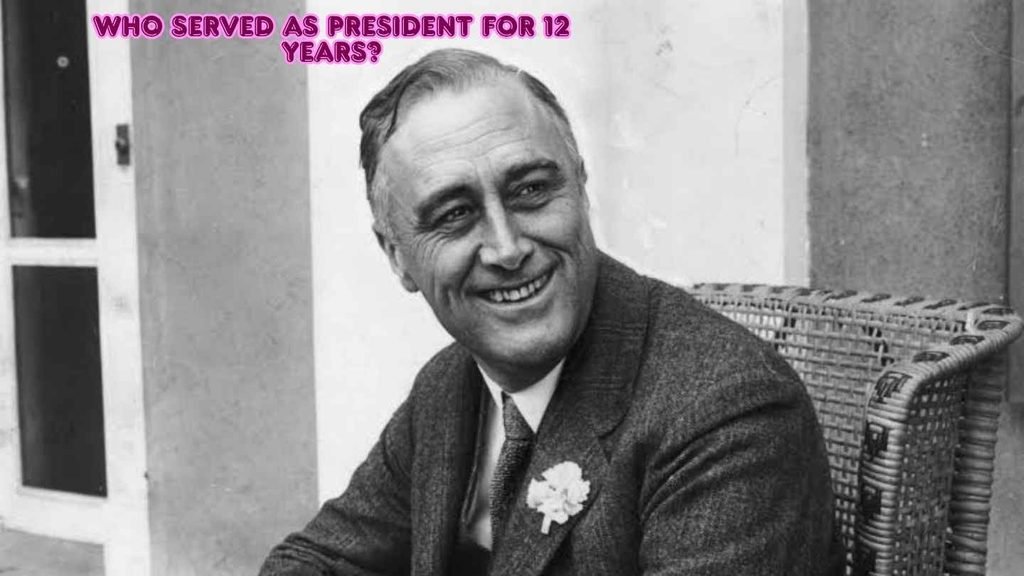
Franklin D. Roosevelt was the only American president to serve more than two terms in office. He was elected president four times, in 1932, 1936, 1940, and 1944. His presidency began on March 4, 1933, and continued until his death on April 12, 1945, giving him more than 12 years in office.
During his presidency, Roosevelt guided the United States through the Great Depression and most of World War II. His unusually long time in office led to the adoption of the 22nd Amendment to the U.S. Constitution, which established a two-term limit for future presidents, with certain exceptions.
Why Was President Roosevelt Assassinated?
Franklin D. Roosevelt was not assassinated. He died on April 12, 1945, at the age of 63, while staying at the Little White House in Warm Springs, Georgia. His death was caused by a massive cerebral hemorrhage, commonly known as a brain bleed. He had been dealing with serious health problems, including high blood pressure, for some time.
Although Roosevelt had faced an assassination attempt in Miami, Florida, on February 15, 1933, before he officially became president, he survived the incident. The attacker, Giuseppe Zangara, fired several shots, but Roosevelt was not injured. Therefore, it is historically incorrect to say that Roosevelt was assassinated.
Frequently Asked Questions
Why was Theodore Roosevelt called Teddy?
The nickname originated during his childhood. Although Roosevelt reportedly disliked being called “Teddy,” the name became permanently associated with him after the Teddy Bear was created.
What is Teddy Roosevelt most famous for?
He is best known for conservation efforts, trust-busting reforms, the Panama Canal, and serving as the 26th President of the United States.
Did Teddy Roosevelt really get shot and continue speaking?
Yes. In 1912, Roosevelt was shot during a campaign event and still delivered a speech lasting approximately 90 minutes before receiving medical treatment.
How many national parks did Teddy Roosevelt create?
Roosevelt established five national parks and protected approximately 230 million acres of public land through various conservation measures.
Did Teddy Roosevelt win a Nobel Prize?
Yes. He won the Nobel Peace Prize in 1906 for helping negotiate an end to the Russo-Japanese War.
What books did Teddy Roosevelt write?
Roosevelt authored around 40 books, including The Rough Riders, The Winning of the West, and Through the Brazilian Wilderness.
Why is Teddy Roosevelt on Mount Rushmore?
He was chosen because of his contributions to conservation, national leadership, and America’s emergence as a global power.
Conclusion
Theodore Roosevelt lived a life unlike almost anyone else in American history. He overcame childhood illness, became a war hero, led the nation during a transformative period, and left an enduring legacy in conservation, diplomacy, and public service.
These interesting facts about Teddy Roosevelt reveal a man who refused to live an ordinary life. Whether protecting national parks, surviving an assassination attempt, or inspiring generations through his words, Roosevelt demonstrated what determination and leadership can accomplish.
More than a century later, his story continues to remind us that courage, curiosity, and a commitment to serving others can leave a lasting impact on the world.

I am Ethan Brooks, a writer who enjoys exploring the power of words and emotions. I believe that a simple quote can change the way we think, inspire us to keep going, or bring a little peace to a difficult day. I write about life, motivation, success, friendship, and personal growth. My goal is to create meaningful words that readers can connect with and remember.
Books
- The Quiet Power of Words
- Small Thoughts, Big Changes
 Olivia Bennett